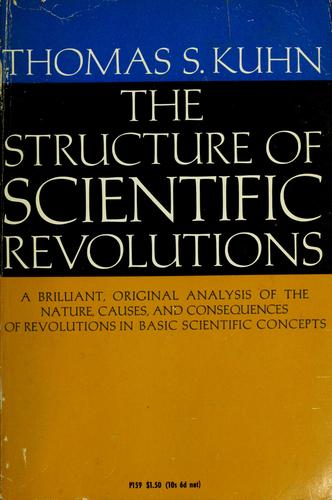
I bought this because I kept hearing the word paradigm used wrong at work and wanted to know what it meant before I got wrong myself, and I did not expect a slim, dense little philosophy of science book to change how I think about basically everything with a rulebook, board games included, which we’ll get to another time.
Kuhn’s actual argument is simple to state and hard to sit with: science doesn’t progress smoothly, it lurches, most working scientists spend most of their time doing what he calls normal science, quietly solving puzzles inside an agreed-upon framework, and then anomalies pile up that the framework can’t explain, and eventually somebody breaks the framework instead of patching it, and that break is the revolution. It’s not additive. The new framework doesn’t just contain more truth than the old one, it makes some of the old questions literally unaskable, which is the part that unsettled me most.
The one real review I could dig up for this called it a humbling book, one that makes anyone practicing science acknowledge the plethora of assumptions baked into their own established norms before they even start asking questions, and I think that’s exactly right, it’s less a history of science than an argument for staying suspicious of your own certainty. Whoever wrote that also flagged the language as terse for the uninitiated, and yeah, fair, this isn’t written to be friendly, Kuhn assumes you’ll do some of the work.
I won’t pretend I absorbed all of it on one pass. Some of the epistemology chapters I had to reread paragraph by paragraph, and I’m still turning over whether “paradigm” as a word has been so strip-mined by business consultants that it’s stopped meaning anything close to what Kuhn meant by it. But as a way of understanding why smart, careful people can look at the same anomaly and just not see it as a problem yet, this is the clearest thing I’ve read.